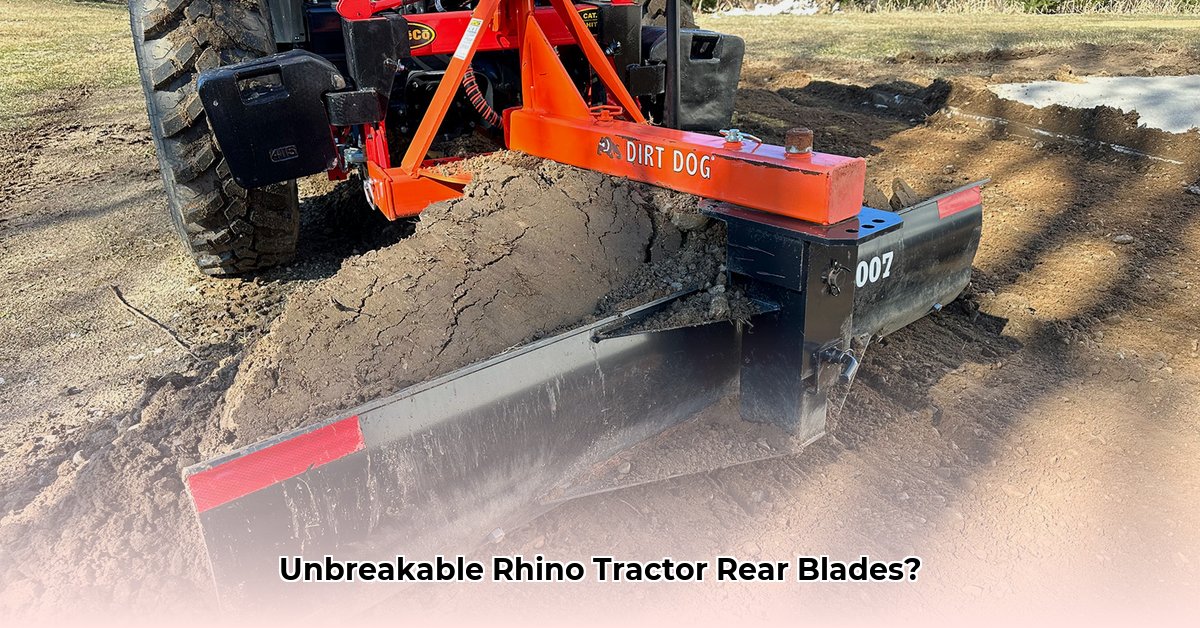
Tractor Rear Blade Powerhouses: Rhino's Heavy-Duty Lineup
Rhino tractor rear blades are designed for years of demanding farm work. Their robust construction and adaptable features make them a strong contender in the heavy-duty agricultural equipment market. But how do they stack up against the competition? Let's examine what makes Rhino blades stand out. For more information on grader blades, check out this resource.
Rhino's Rugged Design: Built to Last
The core of Rhino's durability lies in its exceptionally strong steel kingpins (the central pivoting points of the blade), providing superior stability and eliminating the wobble often seen in lesser-quality blades. The moldboard (the part that moves the soil or material) is reinforced for extended lifespan. This robust design translates to lower maintenance costs and a longer overall service life. It's an investment built to withstand the rigors of daily farm operations.
Adaptability: The Right Blade for Every Job
Rhino offers a range of rear blades (models 850, 950, 1540, 2500, and 3500), catering to various tractor sizes and applications. The smaller models (850, 950, 1540) provide manual control for precision, while the larger models (2500 and 3500) feature hydraulic adjustments for easier operation, particularly beneficial during long workdays. This adaptability ensures a perfect match for diverse farm tasks, from land leveling to snow removal. But what about those who want both speed and accuracy?
The Extended Cutting Edge: A Smart Innovation
Rhino blades incorporate an extended cutting edge. This design innovation significantly reduces wear on the main blade body, acting as a protective shield and lengthening its useful life. This translates to fewer repairs and substantial cost savings over time. The question is, how does this extended edge compare to competitors' offerings?
Comparing Rhino Tractor Rear Blades: A Quick Look
While comprehensive competitor data is limited, Rhino's emphasis on durable materials and thoughtful design suggests potential advantages in longevity and reduced maintenance compared to other heavy-duty blades. However, further independent testing is needed to confirm these claims definitively.
| Model | Estimated HP Range | Adjustment Type | Approximate Weight | Key Features |
|---|---|---|---|---|
| 850 | 85-100 | Manual | (Not specified) | Solid kingpins, reinforced moldboard |
| 950 | 95-115 | Manual | (Not specified) | Solid kingpins, reinforced moldboard |
| 1540 | 150-175 | Manual | (Not specified) | Solid kingpins, reinforced moldboard, heavier build |
| 2500 | 250-300 | Hydraulic | (Not specified) | Hydraulic adjustment, extended cutting edge |
| 3500 | 350-400 | Hydraulic | (Not specified) | Hydraulic adjustment, extended cutting edge |
Note: Horsepower ranges are estimates. Exact specifications should be verified with RhinoAg. Weight information was unavailable at the time of publication.
What We Still Need to Know: Filling the Information Gaps
To provide a truly comprehensive analysis, further investigation is required. Independent comparative testing against key competitors would be beneficial. This testing should assess material strength, cutting edge durability, fuel efficiency, and total cost of ownership (including initial price and maintenance). This additional data would significantly enhance the assessment of Rhino blades' competitive standing.
How to Choose the Best Heavy-Duty Rear Tractor Blade
Key Takeaways:
- Proper blade sizing relative to tractor horsepower is crucial for both efficiency and equipment longevity.
- Reinforced moldboard construction adds significant durability and reduces replacement needs, minimizing both costs and environmental impact.
- Regular maintenance is essential to maximize blade lifespan and minimize waste.
- Hydraulic systems offer superior precision, but manual systems provide simplicity and affordability. The best choice depends on individual needs.
Sizing Your Blade: Horsepower Matters
Choosing the correct blade size for your tractor's horsepower is paramount. Using a blade that's too large will overtax your tractor, leading to potential damage. Conversely, underpowering the blade significantly reduces efficiency and increases workload. The following is a rule of thumb. Is there a more precise way to determine the perfect blade-tractor match?
For tractors under 35 horsepower, a 72-inch blade is recommended. Tractors between 35 and 80 horsepower typically benefit from 84-inch blades. Tractors exceeding 80 horsepower can effectively utilize 96-inch blades. Always consult your tractor's manual for specific guidance.
Material Matters: Strength and Sustainability
The material strength and sustainability are critical considerations. Heavy-duty blades are usually made with steel. Look for reinforced moldboards (at least 0.2 inches thick) for superior durability and reduced replacement frequency. While steel is robust, the blade's recyclability should also be factored into sustainable farming practices. Are there any emerging materials in the market that offer similar durability but with superior recyclability?
Hydraulic vs. Manual: Precision vs. Simplicity
The choice between hydraulic and manual blades depends on the required level of precision versus cost. Hydraulic blades offer superior control and precision for tasks such as contour farming and minimizing soil compaction. They represent an investment in precise technology. Manual blades are simpler, more affordable, and require less maintenance but sacrifice some precision.
Maintenance: Your Investment in Longevity
Regardless of the blade type, consistent upkeep is crucial for extending the blade's service life. A regular maintenance schedule should include:
- Thorough cleaning after each use.
- Regular lubrication of moving parts (per manufacturer recommendations).
- Visual inspections for damage or loose components.
- Prompt repairs for identified issues.
This proactive maintenance approach not only prolongs the blade’s life but also minimizes waste and maintains a sustainable farm operation. How frequently should these maintenance checks be conducted for optimal results?
Beyond the Basics: Considering Your Needs
Beyond size, material, and control mechanisms, consider your specific applications (snow removal, land leveling, material handling, etc.). Each task may necessitate a slightly different blade design for optimal performance. Selecting a blade perfectly suited to your unique operational context is essential for achieving maximum efficiency and sustainability.
Tractor Rear Blade
Content about tractor rear blade (Auto-generated fallback due to API error).